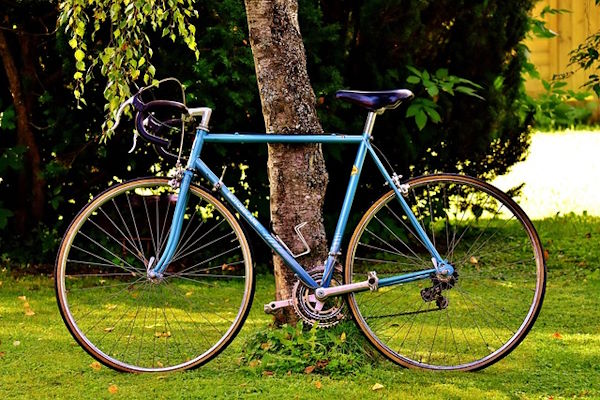
Whilst Cambridge is probably best known for its bicycles, the seemingly free roaming cattle that can be found on the city commons are also a key feature of the city.
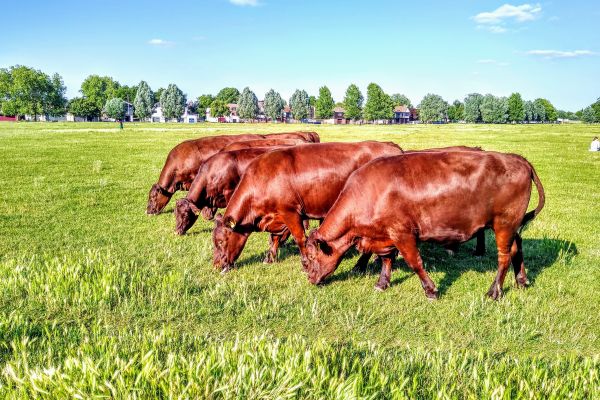
Urban grazing was a widespread practise in medieval times, but over the years most towns and cities stopped the practice, mainly due to economic factors. Cambridge has been the rare exception to this rule and has held on to the approach despite continuing economic pressures making it harder to sustain.
Cambridge city cows don’t just make great photos for tourists though; they can also help protect the city’s biodiversity. By grazing in these spaces, cows can help protect precious ecosystems; enabling wildflowers to thrive which provide a food source for insects, which in turn, are a food source for birds.
The council has an ongoing commitment to protect this unique feature of Cambridge and has significantly subsidised the costs for many years.
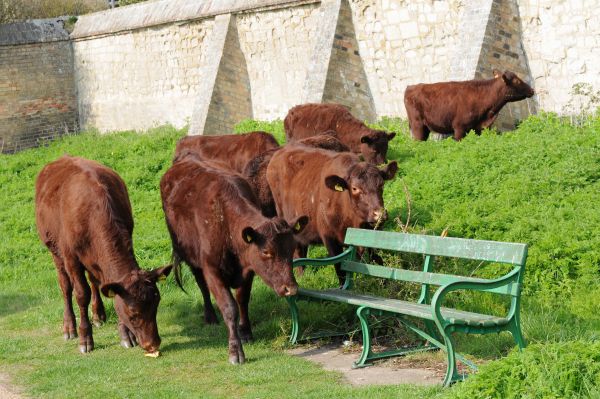
Evolving for the future
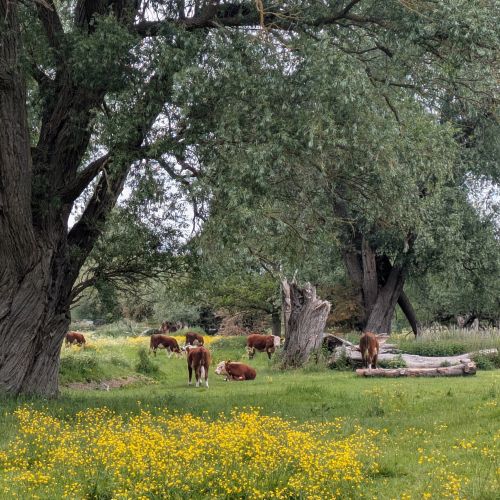 To ensure that our cows continue to be a notable feature of Cambridge’s cityscape for the foreseeable future, we need to make sure it is managed in a way that is environmentally sustainable, financially responsible, and safe in an increasingly busy urban setting. We continually review practises to look for innovative cost saving solutions and to improve impact for residents.
Managing urban cattle safely alongside events, heavy footfall, roads, waterways and out-of-hours incidents (for example escaped cattle or animals entering watercourses) is complex and resource-intensive. It requires staffing, monitoring, fencing, and emergency response arrangements that most rural grazing doesn’t face.
Innovation
In 2025, we introduced an innovative geo (virtual) fence system that keeps cattle away from the riverbanks, off the footpaths and within defined grazing areas. The system enables the graziers to check the whereabouts of their livestock via a mobile phone app. It also reduces the costs of recovering cattle, mostly after falling in the river.
Conservation-led grazing
Grazing is very beneficial for biodiversity when stock levels match the land’s capacity. In recent years, hotter and drier summers have meant parts of the commons have been overgrazed, which can damage grassland habitats, increase erosion along riverbanks, and affect water quality. To protect nature, we know we need to manage cattle numbers more carefully so grazing improves biodiversity rather than harms it.
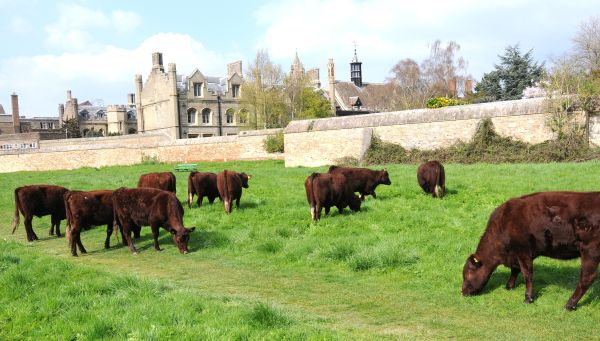
The conservation grazing model helps keeps cattle on the commons by managing them specifically for nature recovery and long-term sustainability. In practice that means:
- matching cattle numbers to what the land can support amid changing climate conditions
- using tools like virtual fencing to protect sensitive areas
- clearer management and welfare arrangements
- restrictions in the use of environmentally harmful worming products
- aligning grazing with biodiversity and conservation funding
This shift will help us secure the future for cattle, so grazing remains a positive and iconic part of Cambridge for generations, while also protecting wildlife and public finances.
FAQs
Who owns the cows?
The council does not own the cows. Each year, graziers are invited to apply for licences to graze cows on the common for 28 weeks from April to October.
Graziers generally own the cattle for commercial purposes and ultimately will sell them.
How much does urban cattle grazing cost the council?
Supporting grazing costs us over £40,000 as the costs are much higher than our income.
This cost will increase in future years due to national farm subsidies being withdrawn and so we seek new ways to continue the tradition in a sustainable way.
What is a pinder service?
Historically, a Pinder service would be undertaken by a council to check whether farmers have permission for their cattle grazing on the commons.
In Cambridge, our Pinder has regularly supported farmers by rounding up stray livestock they come across when doing checks of cattle, and ensured that grazing areas are safe during the April to October grazing season.