A version of this article by Cllr Katie Thornburrow, Leader of Cambridge City Council, was first published in Cambridge Independent on 23 September 2026.
If you remember the 1970s British Rail slogan “Let the train take the strain”, you may also recall that carriages were old and rattling and signal boxes were magnificent brick buildings by the side of the track. Things have changed a lot since then and, over the last decade in particular, regional railways have been quietly increasing their capacity and comfort while the network has been transformed by technology.
We can see the difference in Cambridge. Platforms have been lengthened across the network so train operators can run longer trains by adding extra carriages. In some cases they have doubled the length of the train, massively increasing passenger capacity. Alongside these physical changes, we have seen significant improvements to train schedules, steadily boosting the frequency of services connecting Cambridge with surrounding areas. And of course we have two new stations.
These visible changes have been made possible by essential work behind the scenes. For a long time, much of our regional signalling infrastructure was dated, some of it decades old. This severely limited the frequency with which trains could run for safety reasons. Now most of the signalling has been upgraded and relies on modern electronics, so trains can run faster and closer together on the track. As a result we now enjoy enhanced rush hour services including additional direct trains from Ipswich.
Looking at the broader picture, the expansion of our rail network over recent years is extraordinary. Passenger numbers at Cambridge North have outstripped expectations, Cambridge South is open and busy, and if we look ahead to the arrival of East West Rail linking Cambridge and Oxford, we can anticipate new connections through Cambourne and even a Cambridge East station near the Marshalls site. We might finally see improvements to the line towards Newmarket, which is currently still single track and means there are too few services.
Much as I like trains I know that they are only part of the transport picture and we can’t rely on the train to take all the strain. We need a broad, integrated transport strategy with support from every level of government, bringing together the many different ways people and goods can move. I want Cambridge to have an interconnected transport system inspired by successful models across Europe and the Far East. In those regions, railway and light rail networks act as the backbone of the entire transport system, because they properly connect to other forms of transport. Rail stations work as multi modal transport hubs to connect rail journeys seamlessly with bus services, active travel routes, and road networks.
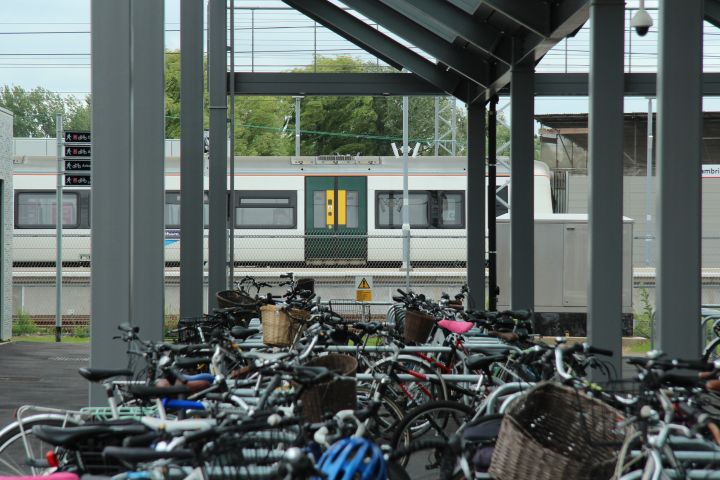
Good design ensures that walking, cycling, and public transport access are prioritised from the outset. High quality, secure cycle parking at stations, easy transfer paths, and accommodating bikes on trains and buses encourage people to leave their cars at home. Trains + bikes and buses + bikes allow for hybrid journeys. Accessibility is equally vital; every station must be fully accessible to wheelchair users and those with reduced mobility like Cambridge South.
Joining these different ways of travelling together requires political commitment and practical coordination. Timetables must be synchronised so that a bus arrives just in time to catch a departing train, or awaits returning passengers in the evening. Integrated ticketing systems should allow a passenger to move between buses and trains without friction. Fares must be fair.
Historically, many urban transport systems were designed primarily around the idea of a daily commute, carrying workers into city centres in the morning and returning them home in the evening. That traditional model fails many of us, including parents dropping children off, carers, shoppers, and people travelling outside peak hours.
It is also important that we recognise that transport is just one element of planning for a thriving city. Good integrated transport systems work hand in hand with other aspects of how we design our cities, towns, neighbourhoods and streets. For example, we can reduce the need to travel by designing communities where people can live, work, and access everyday services locally, and then ensure that when people do travel an integrated network makes sustainable and active choices the easiest option.
One side effect of a good transport system is reducing the pressure on roads, which benefits everyone including those who need to drive. Offering reliable alternatives for daily trips frees up road space for essential journeys, deliveries, tradespeople, and those who depend on motor vehicles.
As we think about transport and the development of the city, I know that community engagement has to be central to the process. We can’t just build a new station without understanding how it fits into to existing spaces. The design work that our shared planning service with South Cambridgeshire District Council did for the planned station at Cambourne resulted in moving the location of the station to a spot that integrates better with anticipated local growth and a change from a footbridge to an underpass for platform access.
This clearly shows how effective it is to actually listen to local residents, businesses, and community groups early on. Incorporating local concerns helps refine high level planning and ensures new infrastructure respects existing neighbourhoods and it is a model that we want to carry forward.
At Cambridge City Council we are working with the many other bodies that are helping shape the future development of the city, including the Combined Authority, the Development Corporation, the County Council and of course neighbouring South Cambridgeshire District Council, so that that we have a modern and integrated transport network that serves everyone. This will allow us to deliver the ambitions of the next Local Plan and make sure that Cambridge develops in a sustainable way that works for everyone.