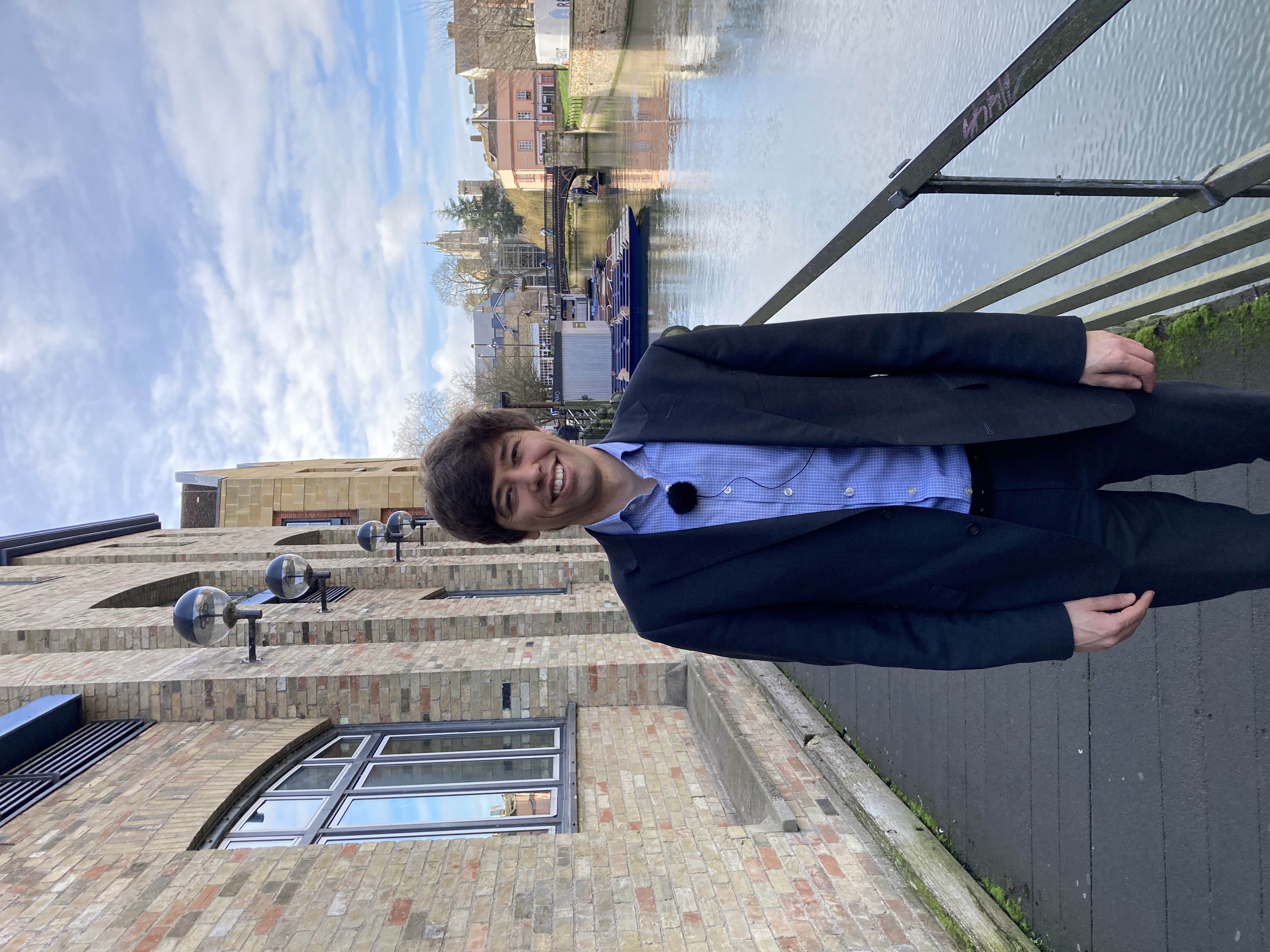
A version of this article by Cllr Cameron Holloway, Leader of the council (pictured), was first published in Cambridge Independent on 25 February 2026.
There has rightly been much discussion in these pages and elsewhere of the government’s proposal for a centrally-led development corporation to drive economic development in Cambridge and South Cambridgeshire over the next 25 years.
The leadership at Cambridge City Council have been saying for several years that, to be able to build desperately needed new homes and community facilities, as set out in our draft Greater Cambridge Local Plan, we need government help to tackle fundamental challenges facing our area which reach far beyond the statutory and geographical scope of local authority powers: water scarcity, transport issues, sewage capacity.
So the government's commitment to an ‘infrastructure-led’ approach to development is very welcome. A development corporation could be very effective in bringing forward new infrastructure, which could make a real difference to residents' quality of life and our ability to plan for new communities.
This must not, however, come at the expense of local democratic involvement in the planning process.
The UK’s planning system is far from perfect, but it is a system of compromise, which attempts to balance competing interests and concerns – and, generally, it does a good job. Local councils, with their democratic legitimacy and close connection to the communities they serve, are uniquely well placed to mediate this delicate balancing act.
Notwithstanding the imperative of local democratic oversight, it is also very hard to see any practical justification for the government’s proposal to strip some planning powers from Cambridge City Council and South Cambridgeshire District Council. Our shared planning service was recently voted the best in the country, it is developing an exemplary Local Plan with extremely high environmental standards, and, far from holding up new development, has approved 37,000 homes which are yet to be built out by developers.
As the government’s current consultation on a development corporation progresses, our priority is listening to local voices. At our recent Cambridge Conversations event, Deputy Leader Cllr Rachel Wade and I invited residents and representatives of local charities and businesses to share their thoughts on the future development of Cambridge. In the coming weeks, we’ll be holding further meetings, including dedicated sessions with young people, to hear from those who live and work in Cambridge what they want for the future of the city.
Key priorities emerging from these and other discussions with people across the city include affordable housing, investing in young people, building communities, and local decision making. As Cllr Wade so aptly puts it, ‘The things that truly enrich our lives are connection, belonging and being heard – and those must be at the heart of how we shape Cambridge’s future.’
A development corporation should reflect these priorities: making it more affordable to live here, offering local people access to good jobs, and ensuring that provision of schools, hospitals, and community facilities keep up with the pace of growth, both for new and existing communities.
Last week, I visited the Cherry Hinton Hub for their regular ‘Coffee with a Cop’. The Hub, a new local centre with a community café, refurbished library, garden and set of meeting rooms, exemplifies so much that is good about communities in Cambridge. But it hasn’t come easily. The Hub has been supported by a £1.7 million investment from the council, and thousands of hours of work from dedicated residents, council officers, and local councillors to get it off the ground. Facilities like the Cherry Hinton Hub are part of the vital social infrastructure our city needs to bring people together as it grows – a prerequisite, not an afterthought, of growth.
We’re trying our best to rebalance wealth, power, and quality of life in Cambridge in favour of our local communities: we’ve built over 700 desperately-needed council homes, with plans for 1,300 more in the next decade; hiked council tax on second homes and empty homes in the city; planted 4,000 trees across the city; set up Greater Cambridge Impact, an innovative social investment vehicle which has already raised over £6 million to tackle poverty and inequality; we plan to bring in a developer tax to fund new transport infrastructure; we’re working on Included, an ambitious programme aimed at making sure that every young person in Cambridge has real access to skills, training, and good jobs; and there’s so much hard, unseen work done day-to-day by our council staff to help people in real need.
Whatever the outcome of discussions around the growth of our area, we will continue to listen to local residents and put fairness at the heart of everything we do.